

There is no single ‘best’ homeopathic medicine for chronic piles, as effective treatment is highly individualized to your unique symptoms. However, remedies like Aesculus Hippocastanum, Nux Vomica, Ratanhia, and Hamamelis are frequently successful when precisely matched to the specific nature of your pain, bleeding, and associated constipation. This guide will walk you through how a homeopathic specialist approaches long-term relief.
As a homeopathic practitioner with over nine years of experience treating chronic digestive disorders, I’ve helped countless patients find lasting relief from piles (hemorrhoids). It’s a condition that causes not just physical discomfort but also significant mental distress. Many patients come to my clinic feeling frustrated, having tried various creams and temporary fixes without success.
My goal here is to give you the same clear, calm, and evidence-informed guidance I provide during a consultation. Let’s explore how homeopathy offers a gentle yet powerful path to healing chronic piles from the root.
What Are the Main Causes of Chronic Piles?
Chronic piles are not an overnight problem. They are the result of sustained pressure on the veins in your lower rectum and anus. In my clinical experience, the most common contributing factors are interconnected, creating a cycle that is hard to break without a holistic approach.
- Chronic Constipation: This is the number one culprit. Straining to pass hard, dry stools puts immense pressure on rectal veins, causing them to swell and become inflamed.
- Low-Fiber Diet: A diet lacking in fruits, vegetables, and whole grains leads to harder stools and constipation.
- Sedentary Lifestyle: Prolonged sitting—whether at a desk, driving, or on the couch—increases pressure on the pelvic region and weakens blood flow.
- Pregnancy and Postpartum: The pressure of the growing uterus and the strain of childbirth are common triggers for piles.
- Hereditary Tendency: Some people have a genetic predisposition to weaker vein walls, making them more susceptible.
- Chronic Digestive Weakness: Issues like Irritable Bowel Syndrome (IBS) or a weak digestive fire (in Ayurvedic terms) can disrupt bowel regularity.
- Lifting Heavy Weights: Improper technique or frequent heavy lifting can cause a surge in abdominal pressure.
Understanding your primary cause is the first step toward finding a permanent solution.
What Symptoms Indicate Chronic or Long-Term Piles?
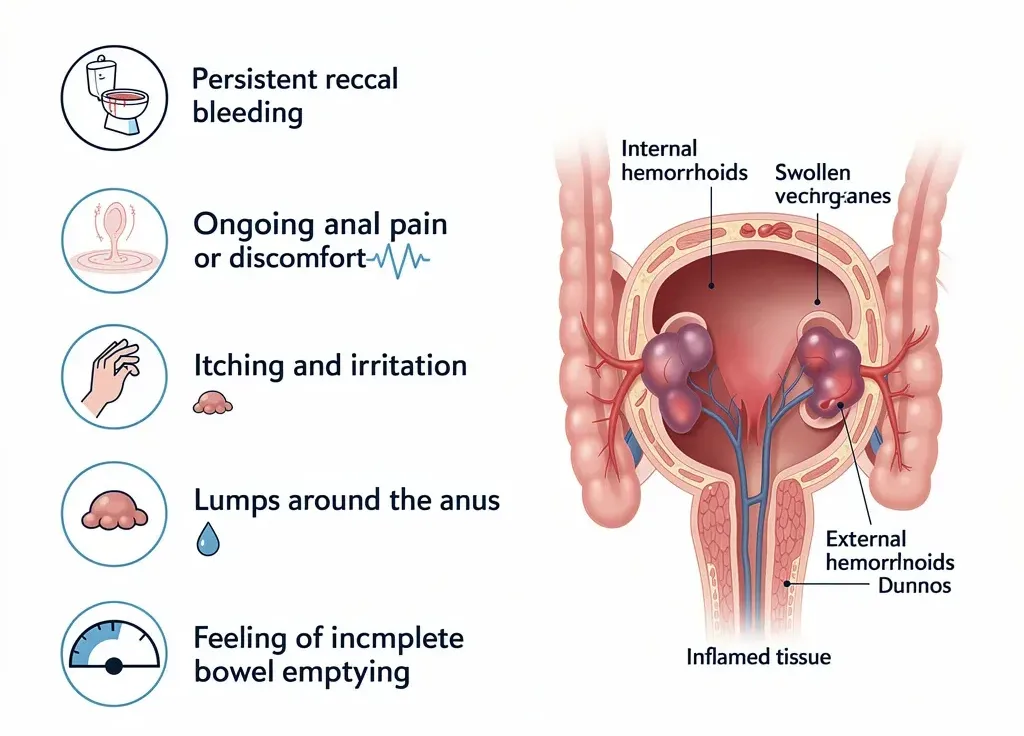
Acute piles might resolve in a week, but chronic piles are a recurring, long-term issue. If you experience the following signs, you are likely dealing with a chronic condition:
- Recurrent Flare-Ups: The piles seem to get better but return every few weeks or months, often triggered by constipation or dietary changes.
- Painless Bleeding: Seeing bright red blood on the toilet paper or in the bowl after a bowel movement is a classic sign.
- Pain, Itching, and Burning: A constant, nagging discomfort, burning, or intense itching around the anus.
- A Feeling of Fullness or a Lump: A sensation that something is still left inside after a bowel movement (incomplete evacuation) or a palpable lump.
- Mucous Discharge: A sticky, clear, or jelly-like discharge can occur, especially with protruding piles.
- Pain While Sitting: For some, sitting for extended periods becomes very painful due to the pressure on the swollen veins.
- Protruding Veins: The piles may hang outside the anus (prolapsed), sometimes needing to be pushed back in manually. This is common in grade 2 and grade 3 piles.
Which Homeopathic Medicines Work Best for Chronic Piles?
This is the question every patient asks. The homeopathic answer is: “The one that best matches your complete symptom picture.” We don’t treat the disease name “piles”; we treat the individual experiencing the disease.
Below are some of the most frequently indicated remedies I use in my practice, along with the specific scenarios where they work best.
Aesculus Hippocastanum → For Dry Piles with Backache
Think of Aesculus when the primary feeling is fullness, congestion, and dryness. Patients needing this remedy often feel like the rectum is full of small sticks.
- Use-When Scenario: Large, non-bleeding, purple-hued piles. There’s a characteristic severe, dull ache in the lower back and sacroiliac region, which feels worse after walking or stooping. Constipation involves hard, dry, difficult-to-pass stools.
Nux Vomica → For Piles from a Sedentary, High-Stress Lifestyle
This is a cornerstone remedy for modern-day ailments. It’s my go-to for patients with piles linked to a stressful job, irregular eating habits, overindulgence in rich food, coffee, or alcohol.
- Use-When Scenario: Itching, painful piles with chronic constipation and an ineffectual urge. The person feels the need to pass stool frequently but can only pass a small amount at a time, leading to constant straining. They are often irritable and easily angered.
Aloe Socotrina → For Protruding Piles with Rectal Weakness
Aloe is indicated when the main issue is a sense of weakness or lack of confidence in the sphincter.
- Use-When Scenario: Piles that protrude like a “bunch of grapes” and are very sore and tender. They often protrude even without straining, such as while urinating or passing gas. There’s often a lot of jelly-like mucous discharge and a feeling of insecurity in the rectum.
Ratanhia → For Intense Burning Pain After Stool
If a patient’s chief complaint is the agonizing pain after a bowel movement, Ratanhia is often the first remedy I consider.
- Use-When Scenario: The pain is described as burning, as if the rectum is full of “broken glass.” This burning can last for hours after passing stool and is often temporarily relieved by cold water application or a sitz bath.
Collinsonia → For Piles with Obstinate Constipation, Especially During Pregnancy
This is an excellent remedy for piles associated with pelvic congestion and severe constipation.
- Use-When Scenario: The patient suffers from the most obstinate constipation, with large, hard, dry stools that require immense effort. It is a leading remedy for piles that develop during pregnancy and is often accompanied by a sensation of sharp sticks in the rectum.
Which Remedies Help Bleeding Piles the Most?
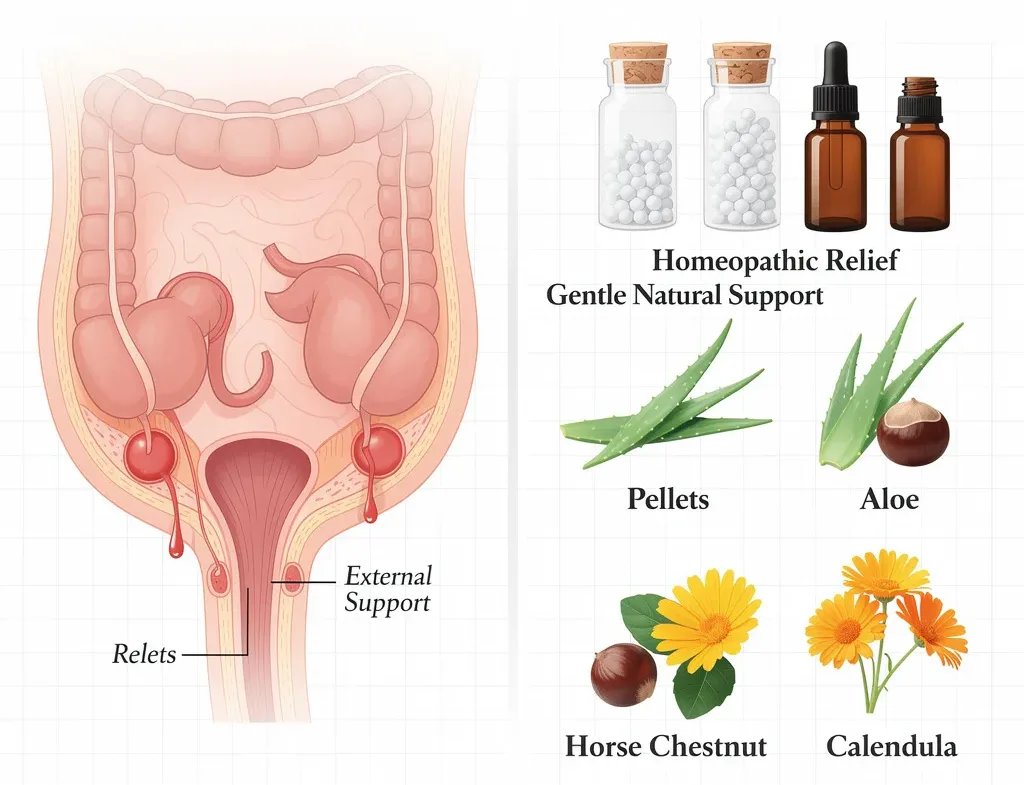
For bleeding piles treatment in homeopathy, we look at the character of the blood.
- Hamamelis Virginica: This is the champion for passive, venous bleeding. The blood is typically dark, and there’s a feeling of soreness and bruising in the affected parts. The person loses a lot of blood without much pain, which can lead to weakness.
- Phosphorus: Indicated for profuse, bright red bleeding that occurs with every stool. The patient is often tall, slender, and may feel anxious or weak after losing blood.
Which Medicine is Best for Burning and Itching in Piles?
For the maddening burning pain in piles, we differentiate carefully:
- Ratanhia: Burning like fire after stool.
- Sulphur: Intense burning and itching that is worse from heat, bathing, and at night. The anus is red and inflamed. Often associated with a history of skin issues.
- Arsenicum Album: Burning pains that are paradoxically relieved by heat. The patient is often anxious, restless, and chilly.
Homeopathic Remedies for Chronic Piles: A Quick Comparison
| Remedy Name | Key Symptoms | Effectiveness Level |
|---|---|---|
| Aesculus Hip. | Dry, non-bleeding piles with severe low backache. | High (for congestive piles) |
| Nux Vomica | Piles from a sedentary life, stress, and constipation with an ineffectual urge. | High (for lifestyle-induced piles) |
| Ratanhia | Excruciating burning pain that lasts for hours after passing stool. | High (for intense anal pain) |
| Hamamelis | Profuse, dark, non-clotting bleeding with a bruised, sore feeling. | High (for bleeding piles) |
| Aloe Socotrina | Piles protrude easily like a “bunch of grapes,” with jelly-like mucus. | High (for prolapsed piles) |
| Collinsonia | Obstinate constipation with large, hard stools; common in pregnancy. | High (for constipation-driven piles) |
Disclaimer: “Effectiveness” is entirely dependent on correct symptom matching by a qualified homeopath.
Can Homeopathy Treat Piles Without Surgery?
This is a critical question. For Grade 1 and Grade 2 piles, the answer is a resounding yes. By addressing the root causes like chronic constipation and venous stasis, homeopathy can not only resolve the current flare-up but also prevent recurrence, often eliminating the need for surgery.
For Grade 3 and 4 piles (prolapsed piles that need to be pushed back in or are permanently prolapsed), surgery may sometimes be necessary. However, even in these cases, homeopathy plays a vital role in:
- Reducing pain, bleeding, and inflammation pre-surgery.
- Promoting faster and more comfortable healing post-surgery.
- Preventing recurrence, which is a common problem even after surgical procedures.
Comparing homeopathy vs surgery for piles, homeopathy aims for a systemic, long-term cure, while surgery is a structural correction. The best approach often combines the two, or uses homeopathy to avoid surgery altogether in less severe grades.
How to Choose the Right Remedy for Chronic Piles?
While the descriptions above offer a glimpse into homeopathic prescribing, self-medication for a chronic condition is not advisable. The nuances—such as the patient’s temperament, food cravings, thirst, and sleep patterns—are crucial for selecting the simillimum (the most similar remedy).
The best way forward is to consult a qualified homeopath who can take your complete case history. Schedule a consultation with our experts at PDM Homeopathy clinic.
What Lifestyle Changes Support Long-Term Relief?
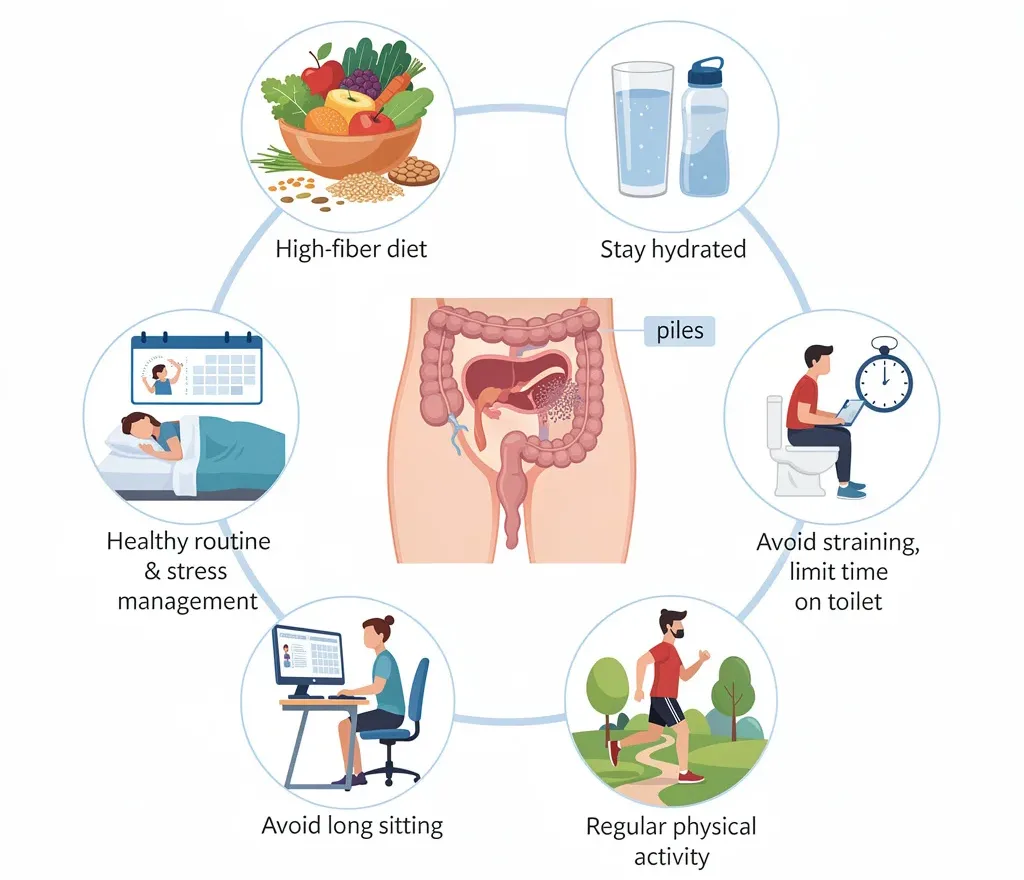
Homeopathic medicine works best when supported by healthy habits. I call these your “treatment partners”:
- Embrace Fiber: Aim for 30 grams of fiber daily from sources like psyllium husk, oats, lentils, apples, and leafy greens.
- Hydrate Consistently: Drink at least 2-3 liters of water daily. This softens stool and makes it easier to pass.
- Practice Sitz Baths: Soaking the affected area in warm water for 15 minutes, 2-3 times a day, can dramatically reduce pain and swelling.
- Avoid Straining: Never force a bowel movement. If nothing happens, get up and try again later. Use a small footstool to elevate your feet, which straightens the rectum and makes elimination easier.
- Get Moving: Aim for 30 minutes of moderate exercise like brisk walking daily. This improves bowel motility and circulation.
- Don’t Ignore the Urge: Go to the toilet as soon as you feel the urge to have a bowel movement.
When Should You See a Doctor for Piles?
While homeopathy is very effective, some symptoms require immediate medical attention to rule out more serious conditions. Please see a doctor immediately if you experience:
- Heavy, continuous, or uncontrolled rectal bleeding.
- Extreme pain that is not relieved by home measures.
- A hard, tender, and extremely painful lump near the anus (this could be a thrombosed hemorrhoid).
- Any symptoms of piles accompanied by fever, chills, or abdominal pain.
- A significant and unexplained change in your bowel habits.
Conclusion
Chronic piles are more than just a physical ailment; they impact your quality of life. The homeopathic approach offers a beacon of hope by looking beyond the symptoms to treat the underlying imbalance. By strengthening your digestive system, improving venous circulation, and addressing your constitutional predispositions, homeopathy aims not just for relief, but for a lasting cure.
You don’t have to live with the daily discomfort and anxiety of chronic piles. A personalized, holistic treatment plan can help you reclaim your comfort and confidence.
Comments are closed