
As a homeopathic practitioner with over nine years of experience, I’ve sat with hundreds of patients who describe the relentless cycle of allergic rhinitis. They feel drained by the constant sneezing, exhausted from poor sleep due to a blocked nose, and frustrated that their quality of life is
dictated by pollen counts or a visit to a friend’s house with a cat.
If this sounds familiar, I want you to know that you are not alone, and effective, sustainable relief is possible. This comprehensive guide is designed to give you the clarity and confidence to understand your condition and explore the best path forward—blending the best of evidence-informed practices with a holistic, individualized approach.
Allergic rhinitis is a common, IgE-mediated inflammatory condition of the nasal passages affecting millions worldwide. Management involves a combination of identifying and avoiding triggers, using targeted medications, and, for some, pursuing immunotherapy or a personalized homeopathic protocol to address the body’s underlying reactivity.
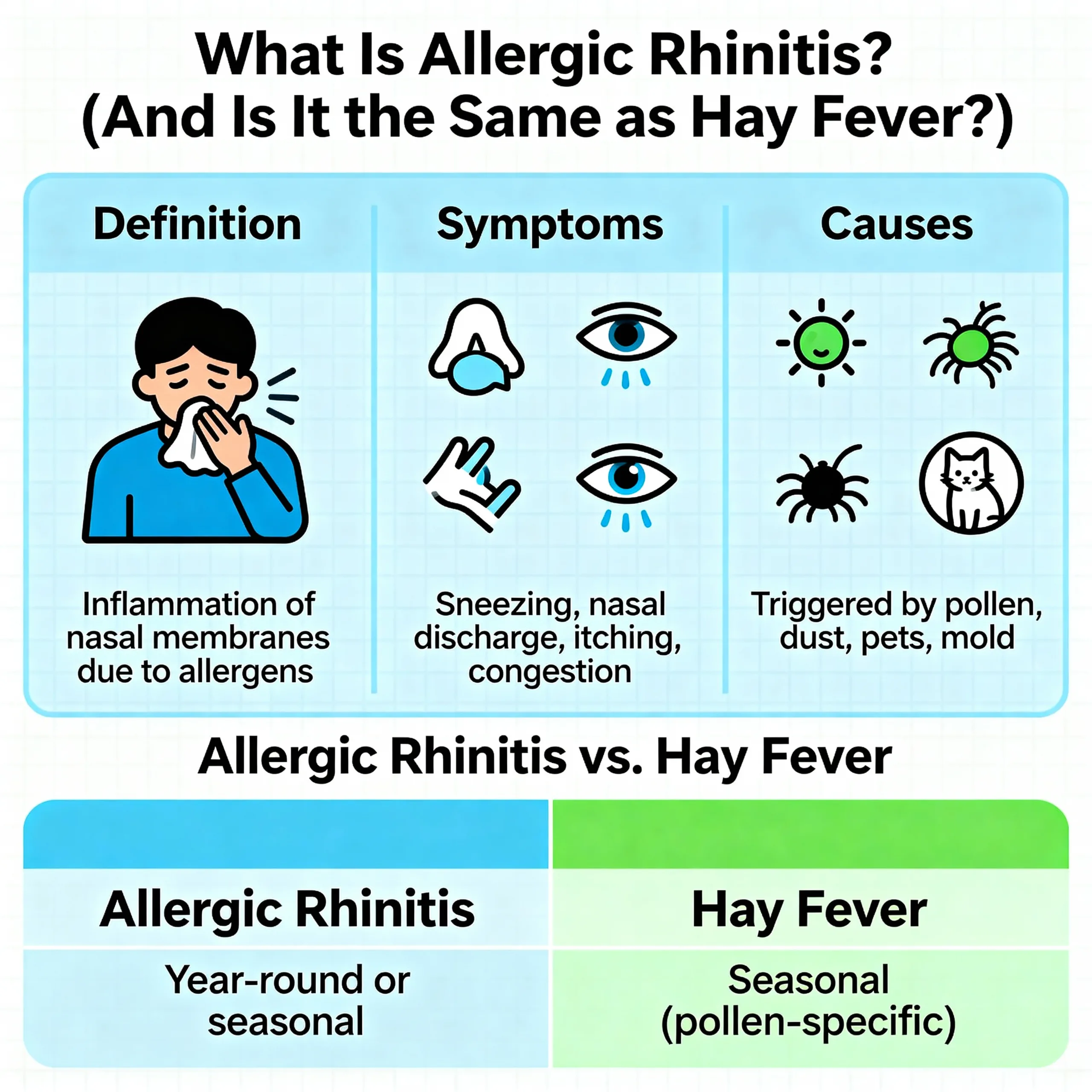
What Is Allergic Rhinitis? (And Is It the Same as Hay Fever?)
This is often the first question my patients ask. Simply put, allergic rhinitis is the medical term for an allergic reaction that primarily causes inflammation in the nose. Your immune system mistakenly identifies a harmless substance—like pollen or dust—as a threat and launches an attack.
- “Hay Fever” is a common, informal name for seasonal allergic rhinitis, which is typically triggered by airborne pollens from trees, grasses, and weeds during specific times of the year.
- Perennial allergic rhinitis, on the other hand, causes symptoms year-round. It’s usually triggered by indoor allergens like dust mites, pet dander, or mold.
Many people experience a mix of both, with perennial symptoms that flare up more intensely during certain seasons.
What Are the Most Common Symptoms of Allergic Rhinitis?
While the triggers may differ, the symptoms are remarkably consistent because the underlying biological process is the same. In my practice, patients almost universally report a combination of the following:
- Repetitive Sneezing: Often in fits of several sneezes in a row.
- Rhinorrhea (A Runny Nose): Usually a clear, watery discharge.
- Nasal Congestion: A blocked or stuffy nose that can significantly impact sleep quality.
- Itchy Nose, Eyes, Throat, and Ears: This classic “allergic itch” is a tell-tale sign.
- Allergic Conjunctivitis: Red, watery, and itchy eyes.
- Post-Nasal Drip: The sensation of mucus dripping down the back of your throat, often leading to a cough.
Patients often describe it as “a head cold that just won’t go away,” but without the fever or body aches that typically accompany a viral infection.
What Causes Allergic Rhinitis? The Immune System’s Overreaction
At its core, allergic rhinitis is a case of mistaken identity. It’s an IgE-mediated immune response, which means your body produces a specific type of antibody called Immunoglobulin E (IgE) in response to an allergen.
Here’s a simplified breakdown of what happens:
- Exposure: You inhale an allergen (e.g., birch pollen).
- Sensitization: Your immune system flags it as dangerous and creates specific IgE antibodies for that pollen. These antibodies attach themselves to mast cells, which are immune cells packed with inflammatory chemicals, primarily in your nose, eyes, and lungs.
- Re-exposure: The next time you inhale birch pollen, it binds to the IgE on your mast cells.
- Reaction: This triggers the mast cells to “degranulate”—releasing a flood of chemicals like histamine. Histamine is the main culprit behind the immediate itching, sneezing, and runny nose. This entire process is driven by an imbalance favoring T helper 2 (Th2) cells, which promote allergic inflammation.
Seasonal Allergens (Hay Fever Triggers)
- Tree Pollen: (Spring) Oak, birch, maple, cedar.
- Grass Pollen: (Late Spring/Summer) Timothy, rye, Bermuda.
- Weed Pollen: (Late Summer/Fall) Ragweed is the most notorious offender.
Perennial Allergens (Year-Round Triggers)
- Dust Mites: Microscopic creatures that live in bedding, carpets, and upholstery.
- Pet Dander: Tiny flakes of skin from cats, dogs, and other furry or feathered animals.
- Mold Spores: Found in damp, humid areas like basements and bathrooms.
- Cockroaches: Their saliva, feces, and body parts are potent allergens.
How Is Allergic Rhinitis Diagnosed?
Diagnosis starts with a thorough conversation. I listen carefully to a patient’s story: when the symptoms started, what makes them worse, and what, if anything, provides relief. This clinical history is often enough for a presumptive diagnosis.
To confirm the specific triggers, two main tests are used:
- Skin Prick Test (SPT): This is the gold standard. A tiny amount of a suspected allergen is pricked into the skin. If you’re allergic, a small, itchy, red bump (like a mosquito bite) will appear within 15-20 minutes.
- Specific IgE (sIgE) Blood Test: This test measures the amount of specific IgE antibodies to various allergens in your bloodstream. It’s a useful alternative if skin tests can’t be performed.
What Is the Most Effective Treatment for Allergic Rhinitis?
Effective management is rarely about a single “magic bullet.” It’s about creating a comprehensive strategy that combines allergen avoidance, symptom management, and, for many of my patients, addressing the root immune imbalance.
According to international clinical guidelines, intranasal corticosteroids are considered the most effective first-line pharmacological treatment for persistent allergic rhinitis symptoms. They work by powerfully reducing inflammation directly inside the nose.
Here’s a comparison of common treatment options:
| Treatment Type | How It Works | Common Examples |
|---|---|---|
| Intranasal Corticosteroids | Reduce local inflammation, congestion, sneezing, and itching. | Fluticasone (Flonase), Mometasone (Nasonex) |
| Oral Antihistamines | Block the action of histamine to relieve itching, sneezing, and runny nose. | Cetirizine (Zyrtec), Loratadine (Claritin) |
| Nasal Antihistamines | Act directly in the nose to block histamine, often working faster than oral pills. | Azelastine (Astelin, Astepro) |
| Decongestants | Shrink swollen nasal tissues. Use with caution for only a few days to avoid rebound congestion. | Pseudoephedrine (Sudafed), Oxymetazoline (Afrin) |
| Nasal Irrigation | Flushes allergens and mucus from the nasal passages using a sterile saline solution. | Neti pots, saline rinse bottles |
| Allergen Immunotherapy | A disease-modifying treatment that desensitizes the immune system to specific allergens over time. | Subcutaneous “allergy shots” (SCIT) or sublingual “allergy drops/tablets” (SLIT) |
How Does PDM Homeopathy Approach Allergic Rhinitis?

At PDM Homeopathy, the focus is on understanding the individual behind the symptoms. Instead of using a one-size-fits-all remedy, each case is assessed through a detailed consultation that explores personal triggers, symptom patterns, lifestyle factors, and overall well-being. This helps identify a remedy that aligns with the person’s unique presentation.
Homeopathic support is selected to help ease discomfort such as nasal irritation, sneezing, watery eyes, or seasonal sensitivity while aiming to improve balance and resilience over time. Many individuals prefer this gentle, personalized approach as part of a broader strategy that may include environmental control, conventional options, or integrative care.
Our goal is always to support long-term comfort and help patients manage their symptoms in a way that fits their health goals.
How Can I Prevent Allergic Rhinitis Symptoms?
Prevention through allergen avoidance is a powerful, non-negotiable first step.
- Track Pollen Counts: Use weather apps to check daily pollen and mold counts and stay indoors when they are high.
- Keep Windows Closed: During your peak allergy season, use air conditioning in your home and car.
- Create a Clean Air Haven: Use a HEPA air purifier in your bedroom to capture airborne allergens.
- Allergy-Proof Your Bed: Encase your mattress, box spring, and pillows in dust-mite-proof covers. Wash bedding weekly in hot water (at least 130°F / 55°C).
- Control Humidity: Keep indoor humidity below 50% with a dehumidifier to discourage dust mites and mold growth.
- Shower Before Bed: Rinse pollen from your hair and skin so you don’t bring it into your bed.
What’s New in Allergic Rhinitis Research?
The field is constantly evolving. Researchers are now looking beyond the classic allergy model and exploring fascinating areas like:
- Local Allergic Rhinitis (LAR): Some people have all the symptoms of allergies, but their skin and blood tests are negative. In LAR, the allergic reaction is happening only within the nasal lining (nasal mucosa).
- The Epithelial Barrier: Scientists are studying how a weakened nasal lining (the epithelial barrier) can make it easier for allergens to penetrate and trigger an immune response.
- Inflammasomes & Autophagy: Advanced research is looking at specific cellular pathways like the NLRP3 inflammasome and processes like autophagy (the body’s cellular cleanup system) to find new targets for future treatments.
Your Path to Breathing Freely
Living with allergic rhinitis can be exhausting, but you have more control than you think. By understanding your triggers, making strategic lifestyle changes, and choosing a treatment path that aligns with your goals—whether conventional, homeopathic, or an integrated combination of both—you can significantly improve your quality of life.
If you are tired of temporary fixes and ready to explore a personalized approach that addresses the root cause of your allergies, we are here to help.
Schedule a consultation with PDM Homeopathy and take the first step toward lasting relief.