




Living with asthma is tough. You might feel like you’re always waiting for the next attack. That sudden tightness in your chest, the scary wheezing sound, and the rush for an inhaler can control your life. This is a reality for both adults and children, creating a constant sense of worry.
As a homeopathic practitioner with over 9 years of experience, I’ve sat with hundreds of patients who share this story. They come to my clinic feeling tired and frustrated. Most importantly, they are searching for a solution that goes beyond just managing symptoms. They want to address the real reason for their breathing trouble.
This is where homeopathy offers a new, hopeful path. It’s not about a quick fix. Instead, it’s a journey to rebalance your body so it can heal itself. This guide will explain how homeopathic treatment for asthma works, what you can expect, and why it’s a trusted choice for long-term breathing wellness.
What Is Asthma? A Homeopathic View
Doctors usually describe asthma as a long-term disease that inflames your airways. Triggers like dust, pollen, cold air, or stress cause the airways to swell and narrow. As a result, you experience wheezing, coughing, and shortness of breath. While this is true, homeopathy looks deeper.
We ask an important question: Why does your body overreact to these triggers?
From a homeopathic view, asthma is a sign of an imbalance deep inside your body. It shows that your immune system is hypersensitive. Therefore, instead of just treating the lungs, we treat the whole person.
- Do you feel anxious, especially at night?
- Do your asthma attacks happen after a stressful day?
- Is your asthma connected to skin problems like eczema?
- Does cold, damp weather make your breathing worse?
Your answers to these questions are crucial. They act as clues that help us find a homeopathic remedy that matches you perfectly, helping your body become stronger from the inside out.
How Does Homeopathy Work for Asthma? It’s All About You
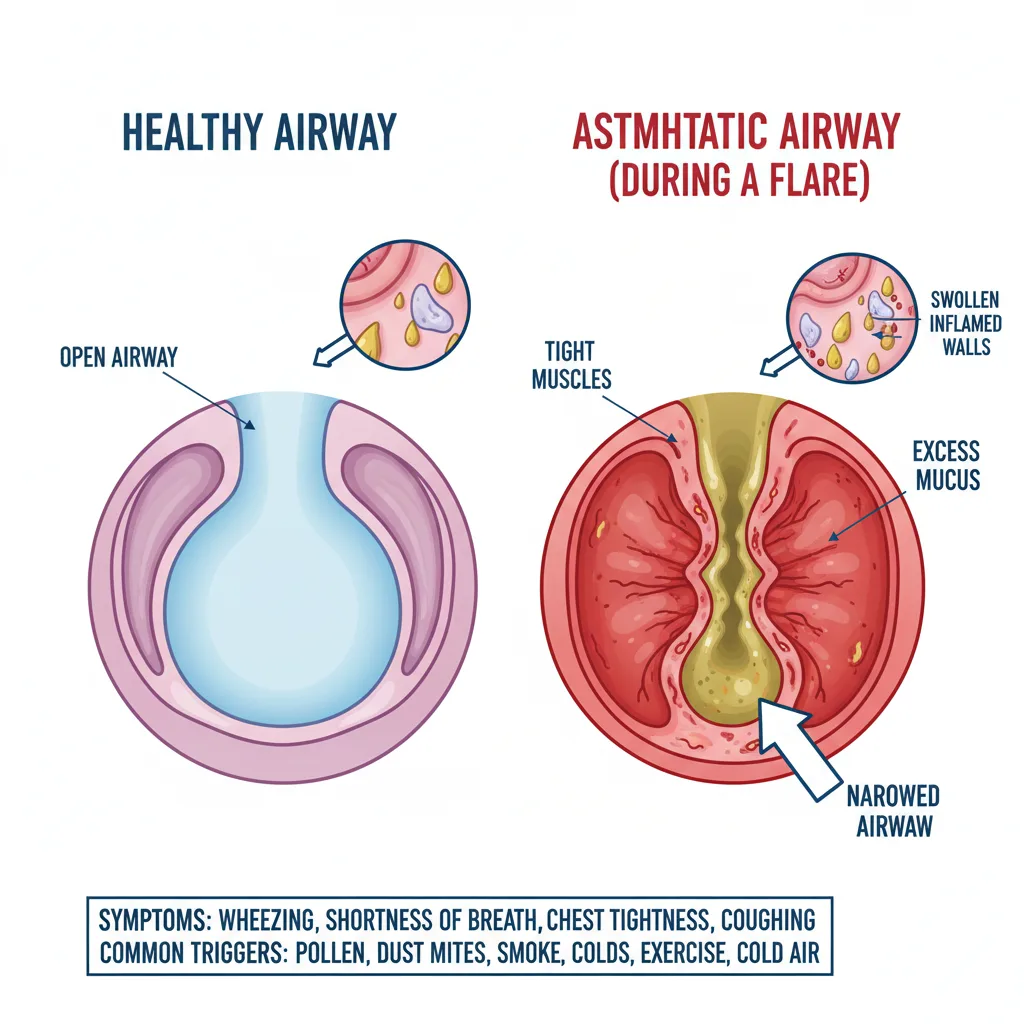
This is the most common question I hear in my practice. The main goal of homeopathic treatment for asthma is simple. We want to reduce your body’s deep tendency to have asthma attacks, not just mask the symptoms.
Think of it this way: Conventional medicine gives you a fire extinguisher (your inhaler) to put out the fire when it starts. This is vital and can be lifesaving. Homeopathy, on the other hand, works to make your body less likely to catch fire in the first place.
We do this using constitutional homeopathy for asthma. This process starts with a detailed conversation. We talk about your physical symptoms, your emotions, your lifestyle, and even your food cravings. After that, we select remedies that best fits your unique profile. Because of this personal approach, there is no one-size-fits-all “homeopathic medicine for asthma.” A remedy for a dry, barking cough will not work for someone with wheezing and a lot of mucus.
Key Homeopathic Medicines for Asthma
To help you understand, here are a few common remedies used for asthma. Please remember, this information is for education only. You should never self-prescribe. The true power of homeopathy comes from a precise prescription by a qualified professional.
- Arsenicum Album: A top remedy for asthma that is worse at night. The person often wakes up between midnight and 2 AM feeling very anxious and restless. They feel a suffocating tightness and may want small sips of water.
- Ipecacuanha (Ipecac): Think “rattling.” The chest feels full of mucus, but it’s very hard to cough up. This is often paired with constant nausea that doesn’t get better, even after vomiting.
- Spongia Tosta: This is for a dry, loud, barking cough, almost like a seal. There is very little mucus. Symptoms are often worse before midnight, and the person feels better sitting up or having a warm drink.
- Antimonium Tartaricum (Antim Tart): This remedy is for a chest full of rattling mucus, but the person is too weak or sleepy to cough it up. They may look pale and feel drowsy. It’s often used for young children and the elderly.
- Pulsatilla: A great remedy for asthma linked to emotions. The person is often gentle, emotional, and feels much better in fresh, open air. The mucus is usually thick and yellow-green.
- Nux Vomica: Suited for a stressed, irritable person whose asthma is triggered by too much food, alcohol, or mental work. They often have digestive issues as well.
Different Types of Asthma Need Different Approaches
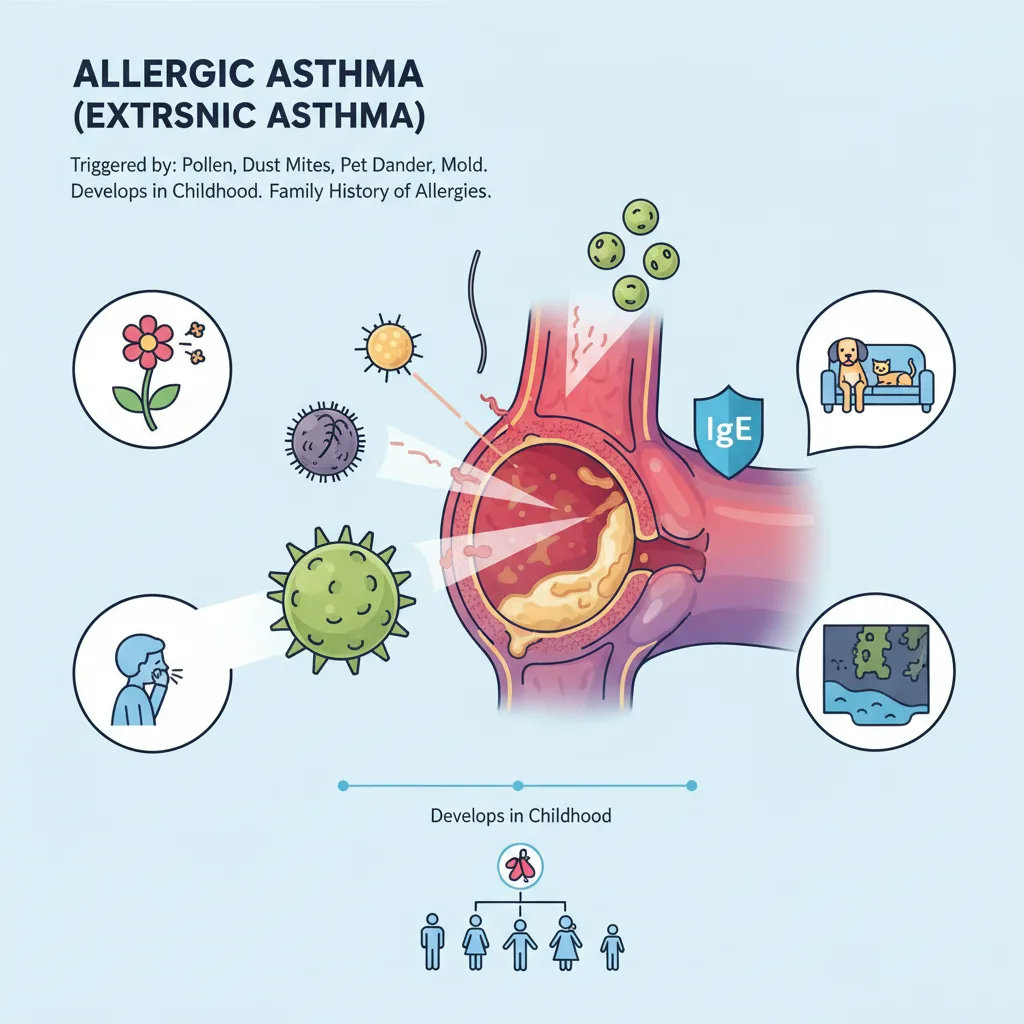
Because homeopathy treats the person, not just the disease name, it can help with any type of asthma.
Homeopathy for Allergic Asthma
With allergic asthma, our goal is to calm the immune system’s overreaction. Instead of just avoiding allergens, we work to make you less sensitive to them. Remedies can help your body become less reactive over time.
A Gentle Choice: Homeopathy for Childhood Asthma
It’s terrifying to watch a child struggle to breathe. Many parents seek homeopathy for childhood asthma because it is safe and has no harsh side effects. By treating a child’s constitution, we help strengthen their growing bodies. This can lead to fewer attacks and a healthier future.
Long-Term Relief: Homeopathy for Chronic Asthma
If you have had asthma for years, homeopathy can offer real hope. We work to improve your breathing day-by-day. The aim is to reduce how often you need your inhaler and to boost your overall energy. This process takes time, but the results can be life-changing.
Homeopathy and Conventional Medicine: Working Together
This isn’t a case of “homeopathy vs. Other Medicines.” In fact, they work best together. I always tell my patients to continue their prescribed medications, especially their emergency inhalers.
Here is a simple way to see their roles:
- Conventional Medicine: Excellent for managing sudden, severe attacks.
- Homeopathy: Excellent for treating the underlying cause to make those attacks less frequent and less severe.
In my practice, we work as a team. As the homeopathic remedy starts working, patients often find they don’t need their inhaler as much. Eventually, and with their doctor’s guidance, they can often safely reduce their reliance on daily medication.
Why Choose PDM Homeopathy for Your Asthma Care?
Choosing a healthcare partner is a significant decision, especially for a chronic condition like asthma. You need a practitioner who not only has expertise but also listens, understands, and sees you as a whole person.
At PDM Homeopathy, our approach is built on a foundation of genuine patient-centered care. When you begin your journey with us, you are not just another case file; you are an individual with a unique story.
Here’s what makes our approach different:
- We Listen, Deeply: Our initial consultations are comprehensive for a reason. We dedicate the time to understand every aspect of your health—your triggers, your emotional state, and your life circumstances. We believe healing begins when a patient feels truly heard.
- Focus on Constitutional Care: We don’t chase symptoms with temporary fixes. Our primary goal is to identify and prescribe the constitutional remedy that addresses the root imbalance driving your asthma. This is the key to achieving deep, long-lasting wellness.
- Experienced & Empathetic Practitioners: Our team combines over 10 years of clinical experience with a compassionate, non-judgmental approach. We are here to guide and support you at every step.
- A Safe, Integrated Partnership: We respect your existing medical care. Our goal is to work collaboratively, providing a safe and effective treatment that complements your current plan, with the long-term aim of reducing your reliance on conventional medications under your doctor’s supervision.
Our commitment is not just to help you manage your asthma, but to empower you on a path to greater health, freedom, and a life with fewer limitations.

